

Is My Dog a Good Fit?
Interested in Having a Therapy Dog?
Here is what it takes.
Handler Dedication
Training is necessary for obedience
Must learn how to navigate visits with people
Need to learn how to protect your dog from hazards on visits
Continuously self-train after certification to avoid losing skills
Keep your dog up to date of vaccinations
Keep your dog well groomed
Passing an extensive multi-day certification exam
A dog with the right temperament
Friendly
Gentle
Likes to be touched by strangers
Follows commands
Adaptive to new environments
Can sit within a few feet of other dogs on leash and not interact with them.
Is not hypersensitive to sounds, movements or unfamiliar things.
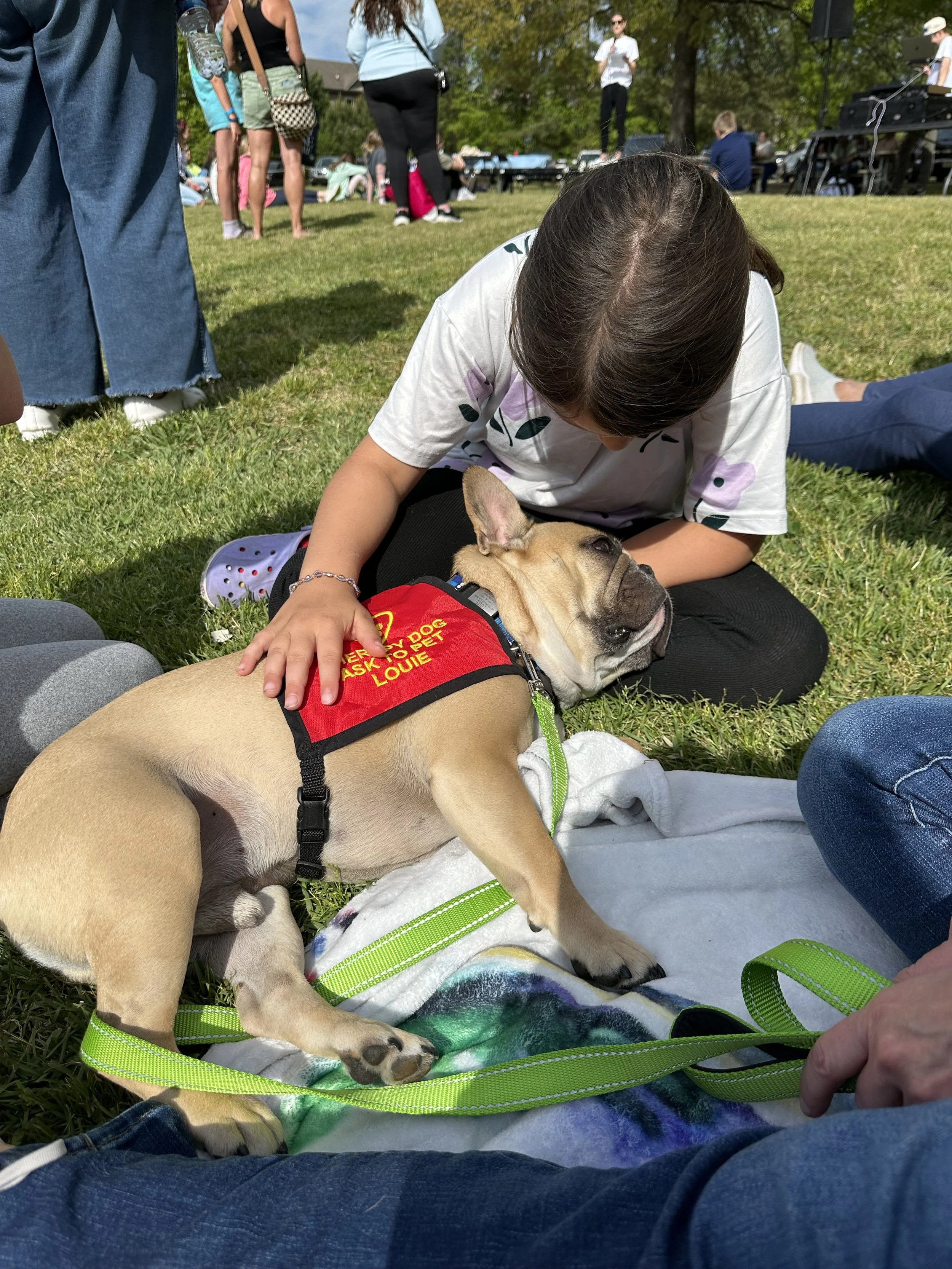
Not all dogs want or can become a therapy dog.
Dogs can be trained but the right temperament is something they are born with or shaped over time.
No matter how much a dog owner/handler would like their dog to be a therapy dog if the dog does not want to it will be obvious.
Reason a dog should not become a therapy dog
The dog has shown aggression to or bitten a human
The dog is reactive to other dogs (bark or lunge )
The dog is shy or fearful of people or other dogs
The dog does not follow commands of handler
The dog is the owners emotional support animal or alert service animal
Frequently Asked Questions

-
Service dogs are trained to perform tasks and to do work that eases their handlers’ disabilities. Working as part of a team with their disabled partners, service dogs help them attain safety and independence. Alert service dogs cannot be therapy dogs.
Emotional support dogs may live with their owner yet their main purpose is to provide support through emotional companionship. Emotional support dogs are not intended to provide support to groups of people as therapy dogs are.
Therapy dogs receive training but have a completely different type of job from service dogs or emotional support dogs. Their responsibilities are to provide psychological or physiological therapy to individuals other than their handlers. Therapy dogs comfort clients via body contact and possess a calm temperament.
-
A dog in good health and temperament need to be at least one year of age to take the therapy dog certification test. There is no age restriction for taking the practice test or therapy dog training classes. A dog is never too old, we have dogs that have become certified therapy dogs over the age of 10!
Junior Handlers between the ages of 14 and 18 will need to test on their own with a parent or guardian present. They will need a parent or guardian to sign the membership papers and accompany them on their therapy dog visits. Some facilities have age restrictions for young people, so make sure you inquire about their rules and regulations before a visit.
-
If your dog has never had any formal training you should enroll in an obedience class followed up with a therapy dog class.
All therapy dog candidates must pass the AKC (American Kennel Club) CGC (Canine Good Citizenship) Test in order to take the certified therapy dog exam with Dogs With A Purpose. We recommend this AKC CGC Evaluator: https://www.jackiesbasicsandbeyond.com/akc-classes
We offer an optional practice test 4 weeks before the certification exams to become familiar with how the test will run and to see which skills you may need to work on. You will need to pass the mandatory pretest to qualify for the final exam.
Your success will depend totally on how much you work with your dog. You need to make your training a “life skill” practiced every day. Being a therapy team requires dedication and commitment.
-
Immediately following the certification test, you will be given a folder with paperwork needing to be filled out by you and your veterinarian. Once completed, that information will be returned to Dogs With A Purpose along with a photo of you and your dog.
Soon after that, you will be provided an ID badge.
Shadowing another therapy dog team or having a staff member accompany you on your first visits is available upon request to build your comfort level. Shadowing is mandatory in hospitals.
-
Certified therapy dogs volunteers teams are welcomed in most medical facilities, schools, extended care facilities, day cares, universities, and libraries. The list is endless! Some of our therapy dogs show off tricks as well on visits.When you have a certified therapy dog, you will be welcomed because you are insured and trained.